


Dental Crowns
Metal-Free Restorations
Protect Your Teeth with High-Quality Dental Crowns
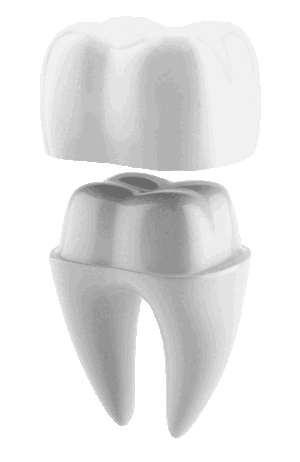
If you want the option of modern, state-of-the-art dental crowns that are natural looking, contain no metals, and can actually strengthen your teeth, give us a call today!
State of the art
Long-Lasting Dental Crowns
Utilizing the latest in modern ceramics, Dr. Patel opts for crowns made from this material instead of traditional porcelain fused to metal crowns. As time passes, the gum tissue can recede, causing the metal to be visible at the gum line. This unpleasant effect can take away from an otherwise beautiful smile.
By choosing ceramic crowns, you can enjoy a durable and long-lasting restoration. These crowns are also biocompatible, meaning that you won’t experience any allergic reactions or tooth sensitivity issues. In fact, the ceramic material looks so authentic that even dentists have trouble detecting them.
You deserve a better and more natural smile without all the metal!
TYPES OF
CROWNS
Full Ceramic / Porcelain
Porcelain or ceramic crowns can be matched to the color of your natural teeth
Porcelain Fused to Metal
Porcelain bonded to a metal shell is often used because it is both strong and attractive.
All Metal
Metals are generally stronger than porcelain and may be recommended for back teeth
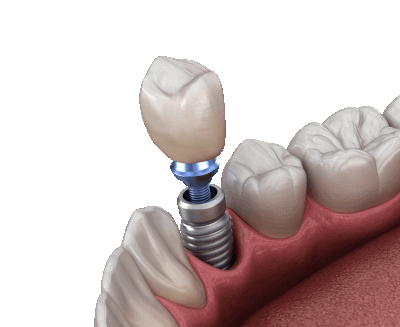
Dental Crowns are used to correct one of these conditions
- Replace a large filling when there isn’t enough tooth remaining
- Cover a dental implant
- Protect a weak tooth from fracturing
- Cover a discolored or poorly shaped tooth
- Restore a fractured tooth
- Cover a tooth that has had root canal treatment
- Attach a bridge
Are Dental Crowns right for You?
Request a Complimentary Consultation with Dr. Nimisha Patel. She will be more then happy to answer any questions or provide second opinion at no charge.
The Crown Procedure
at Our Buford, GA Dental Office
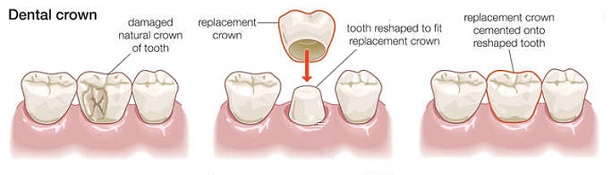
- Our Buford Dentist will examine your teeth to make sure crowns are appropriate for you and discuss what the procedure will involve and some of its limitations.
- Remove decay, prepare and shape the tooth
- Make an impression to provide an exact mold for the crown. If porcelain is to be used, your dentist will determine the correct shade for the crown to match the color of your existing teeth.
- The impression is then sent to a dental lab where they make your crown, in the material your dentist specifies.
- The dentist makes and fits a temporary or transitional crown made out of plastic or metal to cover the prepared tooth while the permanent crown is being made.
When the permanent crown is ready, the temporary is removed, and the new crown is cemented over your prepared tooth or teeth.
How to Care for Your Temporary Crown
- Avoid using the side of your mouth that the temporary crown is on. Shift the bulk of your chewing to the other side of the mouth.
- Avoid chewing hard foods (such as raw vegetables), which could dislodge or break the crown.
- Keep away sticky, chewy foods (for example, chewing gum, caramel), which have the potential of grabbing and pulling off the crown.
- Slide flossing material out-rather than lifting out-when cleaning your teeth. Lifting the floss out, as you normally would, might pull off the temporary crown
How long do Dental Crowns last?
While dental crowns can last a very long time, it’s life span depends on the amount of “wear and tear” it’s exposed to, how well you follow good oral hygiene practices, and your personal mouth-related habits. You should avoid such habits as grinding or clenching your teeth, chewing ice, biting fingernails, and using your teeth to open packaging. The most important step you can take to ensure the longevity of your dental crown is to practice good oral hygiene. Crowns sometimes come loose or fall out if the teeth or bone holding it in place are damaged by dental disease. Keep your gums and teeth healthy by brushing with fluoride toothpaste twice a day and flossing daily. Also, see your dentist and hygienist regularly for checkups and professional cleanings.
How much do Dental Crowns cost?
The cost of a dental crown depends on the material used and the tooth being treated. Crowns typically range from $1,000 to $1,800 per tooth. Some materials, like all-porcelain or gold, may cost more than others. Dental insurance may help cover part of the cost, but coverage varies, so check with your insurance provider.
Complications with Dental Crowns
Discomfort Or Sensitivity
Immediately after the procedure as the anesthesia begins to wear off, your newly crowned tooth may be sensitive. If the tooth that has been crowned still has a nerve in it, you may experience some heat and cold sensitivity. We recommend that you brush teeth with toothpaste designed for sensitive teeth. If pain or sensitivity occurs when you bite down then the crown could be too high on the tooth. If this is the case, call our office. Our dentist can easily fix the problem.
Loose Crown
The cement can sometimes wash out from under the crown. This allows the crown to become loose, and bacteria to leak in and cause decay to the tooth that remains. If a crown feels loose, please contact our office.
Chipped Crown
Chipping sometimes occurs with Crowns made of all porcelain. For a small chip, a composite resin can be used to repair the chip with the crown remaining in your mouth. If the chipping is extensive, the crown may need to be replaced.
Allergic Reaction
Although extremely rare, an allergic reaction to the metals or porcelain used in crowns can occur.
Crown Falls Off
Sometimes crowns can fall off. This is usually due to a lack of cement, or a very small amount of tooth structure remaining that the crown can hold on to. If this happens, clean the crown and the front of the tooth. You can replace the crown temporarily using dental adhesive or temporary tooth cement that is sold in stores for this purpose. Contact our office immediately. We will give you specific instructions on how to care for the tooth and crown for the day or so until you can be seen for an evaluation. We may be able to re-cement the crown in place; if not, a new crown will need to be made.